When Your An Advocate You Don’t Bully Other Advocates That Are Also Patients©

There are many great advocacy groups out there and then their are the few who want to be great but will sadly do more harm than good.

I was recently invited to join one because I have been an active advocate for Osteonecrosis for almost 6 years now.

And over those 6 years spoke to thousands of doctors – a few pro baseball players that developed Avn-on etc… so I do have a lot of knowledge on the subject and great resources.

It was against my better judgement to join but I thought ok I will give them a few tools and share my info with them to help them, then eventually step out of their group because I am very busy with my own advocacy work.

Well I joined yesterday after I was invited and when I was reading the posts on this new group page that was just 1-2 days old I was shocked to see all the copyright infringements.

My stuff pictures from my booklet and web site that I took the time to make and write about , all the research I did.

So I made a comment on how important for a group it is to create your own logos and ask before just using copyright work.

As some was my work and some were others that I know would not be happy with it being used without asking.

If they asked I may have said ok or I may not have.

Most of my things have the copy write and hidden watermarks on it.

I then was going to dinner and advised this group I would post a lot of info later that night.

When I went to post some really good info I found in my hundreds of files , I was removed from this public group and then am continually publicly bullied !

It’s a public group and I am the topic of their discussion for 2 days now .. Maybe they will get tired and eventually start advocating. Hopefully they aren’t one of these groups that talks about money all the time. Most advocates don’t do that.

I have to laugh because clearly these people have no idea that advocacy is about being leaders , patients having patience and instead it turned into a let’s pick on the chic we invited now that she is no longer in group we can talk about her and call her names .

I am shocked at the childish behavior by some people. Well most of leaders or so called leaders of this group.

Anyone who is in their groups better be prepared for drama town.

Thankfully I have a thick skin.

I am far better off without this group in my life. In fact they asked me to join or I never would have know they existed.

I’m a happy advocate, I work hard everyday at my advocacy and I get stuff done.

I don’t sit around waiting for others to do the work for me.

I create my logos and write my blogs I interview doctors- patients- leaders in community, elected officials etc…..

Everything I do and everything you see like my booklet – and the doctor directory I made for USA and and the International one I am and have been working on.

It is there because of all my hour’s of calls, notes and dedication.

I am proud to be the advocate I am and those who don’t like it can move on….

I am far better off with out you.

However many patients who may join that group may fall prey to their bullying and I feel sorry for them.

Because they may be newly diagnosed and just stumble on this group.

If you need a good advocacy group for your Avn drama free I have one.

We love our members and we have fun and educate : if your a bully you are not welcome and if you are in and bully someone you get a warning to be nice because we are all suffering with the same condition. If it happens again they are removed.

Not only does bullying and aggressive behavior create a difficult and hostile environment, it isolates people from getting the support they need.
Be constructive not destructive
If you bullies spent less time copying my stuff and talking about me and made your own your have a lot accomplished by now.
I am hoping they stop messaging me calling me awful names , swearing at me, men and women alike and please stop asking me for all my copyright stuff.
I know what I have and I know all my copyrights and publications are legit.
There is a thing it’s called research
Look it up!!!
It’s there.
All my stuff is copyright protected or permission maybe given but rarely and resources noted.
Why do slackers and bullies feel the need to just use other people’s art and print published copy for their benefit?
I help everyone and I am proud of that.
Being an advocate requires work and kindness.
Also to patients you should never pay for being part of an advocacy group.
You should never have to pay for anything and don’t be guilted into sob stories asking for money or items.

If you have Avn and need a group a good group that I promise will respect you and never ask you for anything to join check out.

Unfortunately I will be removing some members from my group , who are now in a moderator or leadership position in that specific bully group.

I hate to remove people from my support group.

But I feel so strongly about being kind to others that if you choose to be a leader of a group based on bullying I don’t think my group is a good fit for you.

If you feel that the group you chose to be a part of is not as you expected your welcome to join or return to ours.

I’m all for being involved in one or several support groups. But not groups formed and run on bullying and always asking for money. My group never requires or asks for money or donations.
If you need a support group that supports you link is below

AvascularNecrosis/OsteonecrosisSupport Int’l

You deserve to be treated kindly respectfully and not bullied when you are already suffering.

Real advocates are busy advocating and raising awareness not harassing advocates or members.

#YouMatter

Thanks

Wishing you a pain free day.

❤️Deb Andio

©Debla2019

©Debla2019

https://www.facebook.com/groups/DeadBoneDiseaseAVN/?ref=share

Avascular Necrosis Shoulder

Medical research has identified a number of risk factors associated with AVN.

Interestingly, not everyone who has a risk factor gets AVN and not everyone with AVN has an easily identifiable risk factor, meaning the cause is unknown or idiopathic.

People who have a fracture of the proximal humerus (ball part of the shoulder) are at risk for AVN.

With a fracture of the proximal humerus the blood supply can be disrupted and loss of the normal blood flow to the bone may cause it to eventually die and become necrotic.

The more extensive the fracture the more likely is this development of AVN.

Another common cause of AVN is the effect of steroids given for other conditions.

The steroids are believed to damage the health of the cells which make bone in the humeral head and when they die the sequence of AVN occurs.

Other causes of AVN can be radiation or chemotherapy treatment in the case of cancer.

Other rare causes include sickle cell disease, Gaucher’s disease, Caisson’s disease (also known as diver’s disease or the bends:

This is due to sudden change in water pressure in deep sea diving where nitrogen bubbles form in the blood and damage the blood supply to the humeral head). 

AVN Avascular Necrosis aka Osteonecrosis ON

usually presents as pain and may also be associated with noise and crunching sensation (crepitation) in the shoulder with movement.

Movement may be limited due to pain. About 50% of individuals who develop atraumatic (without a fracture) AVN in the shoulder will also have involvement of other joints.


In its early stages AVN may not be apparent on a plain x-ray but it can be seen on an MRI (described above).

As it progresses with collapse of the humeral head and eventual arthritis it is clearly seen on an x-ray (see figures below).

4(1)

Stage 1 is a shoulder with a normal X-ray but signal changes on MRI showing subchondral edema.

Stage 2 is a shoulder with more whitened bone called sclerosis, near the joint surface (subchondral).

Stage 3 demonstrates a crescent sign or collapse or fracture of the subchondral bone.

Stage 4 demonstrates flattening of the humeral head from advanced collapse.

Stage 5 or end-stage AVN demonstrates advanced collapse of the humerus with degenerative changes of the glenoid (arthritis).


A study that looked at 200 shoulders with AVN found that about 40% of shoulders with early AVN progressed in 3 years to advanced AVN.


Patients that presented with later-stage AVN, 55-80% of patients (depending on how late the stage) progressed to advanced AVN6.

Drilling of the humeral head, called core decompression, is a treatment which may be helpful in the early stages of AVN before the humeral head collapses.

It is believed that pressure in the bone goes up when the blood supply is lost and that pain can be relieved by decompressing the bone by drilling into it.

This is called core decompression. This may also stimulate better blood supply and faster healing in the humeral head.

Facts

• A condition caused by interruption of blood supply to humeral head

• Pathophysiology

◦ pathoanatomy 

decreased blood supply to humeral head leading to death of cells in bony matrix.

bone is resorbed and remodeled, causing subchondral bone collapse and may lead to joint incongruity and arthritic changes

◦ etiology similar to hip

Remember ASEPTIC mneumonic 

Alcohol, AIDS

Steroids (most common), Sickle, SLE

Erlenmeyer flask (Gaucher’s)

Pancreatitis

Trauma

Idiopathic/ Infection

Caisson’s (the bends)

may be atraumatic

posttraumatic

four-part fracture-dislocations approach 100% AVN

displaced four-part fractures ~45% AVN

valgus impacted four-part ~11% AVN

three-part ~14% AVN

• Prognosis

◦ related to stage of disease

Anatomy

• Blood supply

◦ Humeral head

ascending branch of anterior humeral circumflex artery and arcuate artery

provides blood supply to humeral head

vessel runs parallel to lateral aspect of tendon of long head of biceps in the bicipital groove

beware not to injure when plating proximal humerus fractures

arcuate artery is the interosseous continuation of ascending branch of anterior humeral circumflex artery and penetrates the bone of the humeral head

provides 35% of blood supply to humeral head

posterior humeral circumflex artery

most current literature supports this as providing the main blood supply to humeral head 

provides 65% of blood supply 

Classification


Cruess Classification (stages)

Stage I

Normal x-ray. Changes on MRI. Core decompression.


Stage II

Sclerosis (wedged, mottled), osteopenia. Core decompression.


Stage III

Crescent sign indicating a subchondral fracture. Resurfacing or hemiarthroplasty.


Stage IV

Flattening and collapse. Resurfacing or hemiarthroplasty.


Stage V

Degenerative changes extend to glenoid. TSA.


Presentation

• Symptoms

◦ insidious onset of shoulder pain

often without a clear inciting event

◦ pain, loss of motion, crepitus, and weakness

• Physical exam

◦ limited range of motion

◦ crepitus

◦ weakness of the rotator cuff and deltoid muscles

Imaging

• Radiographs

◦ recommended views

five views of shoulder (shown best in neutral rotation AP)

◦ findings

no findings on radiograph at onset of disease process

osteolytic lesion develops on radiograph demonstrating resorption of subchondral necrosis

most common initial site is superior middle portion of humeral head

crescent sign demonstrates subchondral collapse

may progress to depression of articular surface and consequent arthritic changes.

• MRI

◦ preferred imaging modality

~100% sensitivity in detection

◦ will demonstrate edema at the site of subchondral sclerosis 

Treatment

• Nonoperative

◦ pain medications, activity modification, physical therapy

indications

first line of treatment

technique

physical therapy

restrict overhead activity and manual labor

• Operative

◦ core decompression + arthroscopy (confirm integrity of cartilage)  

indications

early disease (precollapse Cruess Stage I and II)

◦ humeral head resurfacing

indications

Stage III disease with focal chondral defects, and sufficient remaining epiphyseal bone stock for fixation.

◦ hemiarthroplasty  

indications

moderate disease (Cruess Stage III and IV)

◦ total shoulder arthroplasty 

indications

advance stage (Cruess V)

References

  1. Mont MA, Payman RK, Laporte DM, Petri M, Jones LC, Hungerford DS: Atraumatic osteonecrosis of the humeral head. J Rheumatol 2000; 27:1766-1773
  2. Hasan S, Romeo A: Nontraumatic osteonecrosis of the humeral head J Shoulder Elbow Surg 2008; 281-298
  3. CruessRL: Corticosteroid-induced osteonecrosis of the humeralhead. Orthop Clin North Am 1985; 16:789-796.
  4. LaPorteDM, MontMA, MohanV, JonesLC, HungerfordDS: Multifocal osteonecrosis. J Rheumatol 1998; 25:1968-1974.
  5. CruessRL: Experience with steroid-induced avascular necrosis of the shoulder and etiologic considerations regarding osteonecrosis of the hip. Clin Orthop Relat Res 1978; 130:86-93
  6. HattrupSJ, CofieldRH Osteonecrosis of the humeral head: Relationship of disease stage, extent, and cause to natural history. J Shoulder Elbow Surg 1999; 8:559-564.
  7. Feeley BT, Fealy S, Dines DM, Warren RF, Craig EV. Hemiarthroplasty and total shoulder arthroplasty for avascular necrosis of the humeral head. J Shoulder Elbow Surg 2008;17(5): 689-694.
  8. Harreld KL, Marker DR, Wiesler ER, Shafiq B, Mont M. Osteonecrosis of the Humeral Head. J Am Academy of Orthop Surgeons 2009;17(6): 345-355.

WegoHealthAwards 2019 ©

Wow I am beyond honored I’ve now also been

Nominated for Patient Leader Hero- Healthcare Collaborator – Rookie of The Year and Best In Show Blog

Endorsements Now Open If You Would Like to Vote (link below)

I have been nominated for the past few years in various categories

Thank You for considering Endorsing my nominations

It’s deeply appreciated

Thank You

WegoHealthAwards Link

Signs It May Be Time For Hip Replacement©

When you have tried everything an all non-surgical treatments stop relieving your chronic hip pain, or your pain reaches debilitating levels, hip replacement surgery may be the best option to relieve your discomfort, restore your mobility and improve your quality of life.

Hip pain due to Osteonecrosis is an increasing problem for many.

After time over-the-counter pain medications can lose their efficacy and chronic hip pain can quickly escalate often requiring prescription medications, physical therapy, and the use of canes or walkers to aid mobility.

If your pain is severe and debilitating, isn’t it time to do something about it.

Talk to your Doctor or Orthopedic because you don’t need to suffer and have a poor quality of life.

What Signs & Symptoms Indicate a Need for Hip Replacement Surgery?

Hip pain can have a number of causes, not all of which can be relieved by a hip joint replacement.

Among the listed causes of AVN are steroid use, trauma, hypertension, rheumatoid arthritis, and alcoholism, blood clot disorder, smoking, vasculitis Bisphosphonate use, Chemo or radiation or it could be idiopathic, meaning no cause can be determined. Certainly Napoli has had his share of wear and tear, being a catcher.

For instance, constant or long-lasting stiffness in your hip joint can be a sign of rheumatoid arthritis while pain that centers in the buttocks region and radiates down the leg may be related to sciatica.

However, many cases of hip pain and discomfort are directly related to your hip joint.

Symptoms and signs that it may be time for hip replacement surgery include:

• Mobility issues, especially if your level of mobility progressively worsens

• Persistent or recurring pain, swelling or discomfort in your hip

• Hip pain that worsens during rainy weather

• Inability to sleep due to hip pain and discomfort

• A “grating” feeling in your hip joint

• Increasing difficulty in climbing stairs or getting in and out of cars, bathtubs, and chairs

• OTC medications no longer effectively manage your hip pain

If you have any or all of these symptoms, talk to an orthopedic surgeon about the possible need for hip replacement surgery.

How Is a Diagnosis Made?

To determine if you are a good candidate for hip replacement surgery, you will need a thorough examination by an experienced orthopedic surgeon. This examination will include:

• A complete medical history evaluation, including any previous injuries or illnesses that could be contributing to your pain

• A physical assessment to determine your range of motion, pain level and the strength of your affected hip

Your orthopedic surgeon may also order additional medical testing, including MRIs and X-rays. If your surgeon decides that the next step is hip replacement surgery, be sure to discuss any questions or concerns you have about the surgery or recovery from hip replacement surgery.

What Do You Need to Know About Hip Replacement Surgical Procedures?

Potential candidates for hip replacement surgery need to know that the surgery is a time-tested procedure that has been used successfully for more than four decades to relieve chronic hip pain and improve both flexibility and mobility. More than 300,000 Americans opt for hip replacement surgery each year to rid themselves of hip pain and improve their quality of life.

Total hip replacement surgery, or total hip arthroplasty, uses a ball and socket prosthetic joint to replace your damaged one. Special metals, such as cobalt-chromium and titanium, and polyethylene plastics, are used to make your prosthetic joints. These materials are safe for use inside the body and are extremely durable and long lasting.

The procedure for your total hip replacement surgery will most likely include the following steps:

1 Separating your femur from your hip socket

2 Removing the damaged ball from the femur

3 Removing your damaged bone and cartilage

4 Inserting a metal shell into your pelvic bone socket and using bone grafting material to secure it

5 Completing the artificial socket by adding the plastic liner

6 Preparing your femur to receive the metal implant

7 Placing the metal implant into the hollowed end of your femur

8 Attaching a metal ball component to the stem

Hip replacement surgery is a very effective procedure, and most patients experience a dramatic reduction in pain and improvements in their mobility and stamina. With the proper recovery procedures and physical therapy, you should be able to enjoy walking, swimming, biking and other low-impact activities without impediment.


If you can no longer bare the pain or have problems walking talk to your ortho about your options.


Good luck

We’re praying for you

Text ©Debla2014


Is Your Hip Pain The Sign of a Rare Condition?

Your hips are largest and most powerful of muscle groups—the glutes, quads, and hamstrings—all connect at the hips, and they allow you to walk, run, climb. The hip joint is crucial to all movement, in sports and day-to-day life, which is why persistent hip pain can be such a pain in the ass literally and often debilitating.

hip


Wear and tear on your hip joint can worsen with age. According to the Centers for Disease Control and Prevention, 7 percent of adults in the U.S. suffer from hip pain, the third most common joint pain behind shoulder pain, at 9 percent, and knee pain, at 18 percent. There’s also a growing prevalence of young athletes with hip injuries, especially young women, due to repetitive overuse and acute trauma.

Trauma can sometimes lead to osteonecrosis  in any joint but we are focusing on the hip , and some of the medications given to help inflammation and strengthen bones can also be a cause of osteonecrosis aka avascular necrosis.

Your Hip Pain May be the Sign of a Rare Condition

If you have hip pain don’t always brush it off as arthritis, if it persists, get it checked out to be safe

Persistent or worsening hip pain warrants a visit to your health care provider and possibly a sports medicine specialist or ortho. Some problems, particularly hip stress fractures, are commonly misdiagnosed due to the confusing presentation of symptoms.


A thorough evaluation is necessary and often includes X-rays and other studies, such as an MRI or bone scan. As with all injuries, the absence of pain does not mean that all is well. Strength and flexibility deficits must be addressed to allow a healthy return to helping your quality of life.


Although a person may not initially experience symptoms, hip pain is usually the first indicator. The earlier the diagnosis is achieved, the better the patient’s potential outcome. AVN has four stages that can progress over a period of several months to more than a year. In Stage I, the hip is healthy; in Stage II, the patient experiences mild to moderate pain in direct proportion to the deterioration of the head of the femur (or ball of the hip joint). By Stage III, usually the patient will find it difficult to stand and bear weight on the hip, and joint movement will be painful. During this stage, the ball of the hip has deteriorated to what is called a subchondral fracture and early collapse. Stage IV is a full collapse of the femoral head and degenerative joint disease (DJD).


Treatment for AVN is recommended based on the stage of the disease coupled with the age of the patient. In Stage I, medication and crutches may be prescribed to provide relief and enable the bone to heal on its own. This treatment may require the patient to be non-weight-bearing for up to six months. It also has a failure rate greater than 80-percent.

On the horizon treatments are stem cell.


Surgical treatment is recommended with a Stage II diagnosis, or very early in a Stage III diagnosis. A procedure, known as a core decompression, typically involves drilling one large hole in the core of the effected bone, with or without a bone graft, to reduced pressure and improve blood circulation in the hip. Another surgical option is the vascularized fibular graft, which takes a healthy piece of bone from the fibula, along with the artery or vein, and transplants and reattaches it into the hip, to help healthy bone grow. Recovery can take several months.


Because most patients are diagnosed in late Stage III or IV of the disease, when the bone quality of the femoral head is poor (subchondral fracture) or has collapsed, total hip replacement is the most successful treatment for AVN. This procedure replaces the damaged bone with artificial parts. Recovery takes about eight to twelve weeks. If left untreated, AVN progresses and results in pain and severe debilitating osteoarthritis.

Treatment decisions for AVN are ultimately up to the patient and are based on his or her lifestyle and goals. If you are suffering with hip pain, talk with your primary care doctor about a referral to an orthopedic surgeon

Maintaining Angiogenesis Can Prevent Glucocorticoid Induced Osteonecrosis

Angiogenesis is a key component of bone repair. … Angiogenesis is regulated by a variety of growth factors, notably vascular endothelial growth factor (VEGF), which are produced by inflammatory cells and stromal cells to induce blood vessel in-growth.

Wouldn’t it be great if there wa a way many could keep their blood vessels healthy and avoid or lower risk of developing Osteonecrosis?

Research and links below discuss just that.

#angiogenesis and bone repair in steroid-induced osteonecrosis

#Osteonecrosis #AvascularNecrosis

Links

Angiogenesis in Bone Regeneration What It Is

Angiogenesis and Bone Repair For Osteonecrosis Info and Links

Maintaining Angiogenesis Prevents Glucocorticoid Induced Osteonecrosis

Genetic association of angiogenesis- and hypoxia-related gene polymorphisms with osteonecrosis of the femoral head

How people can develop Osteonecrosis in Jaw.

Link below.

Osteonecrosis of the Jaw and Angiogenesis inhibitors: A Revival of a Rare but Serous Side Effect.

Photo credit and website listed below.

Bringing new life to damaged bone: The importance of angiogenesis in bone repair and regeneration photo linked to this site

Tracking Pain – With A Journal©

While each person’s experience with Osteonecrosis is different, I want to make sure you have the right information and support you need to live life your best life in spite of osteonecrosis.

There are ways I was able to control my pain, lower overall inflammation in my body which helped my pain.

Also did you know that for many people statins helped as well?

It was time I stopped just being a patient , and I became an advocate and patient leader. It was time to take a personal approach to my health many doctors didn’t understand how I felt, some often seemed as if I was exaggerating or making it up.

This pain wasn’t in my head, and if anything I’m downplaying my pain vs telling you doctors how terrible it is on a constant and daily basis.

Let’s face it when we have chronic pain we don’t always want to cook all day . But I found out trying to save time and energy by grabbing a pizza or burger isn’t helping my pain.

The more junk fats like fast food, processed garbage I removed from my life over time the better I was feeling.

It’s not a cure or a easy fix.

But it’s not hard and it’s delicious.

I’m the main cook in our family. So I prepared meals that have less and no meat more often.

From meatless Monday to now meatless M-W-S

And it was a great success , soon we only ate meat or chicken 1x a week and fish 1x -2 x a week.

We did eat eggs .

Before I knew it some weeks we didn’t eat meat or poultry at all.

We did have fish like cod , tuna, haddock ,crab,shrimp or tuna steaks.

We didn’t care for salmon much.

I also started a pain journal it had what I ate- what I did – my stress level- pain level

Whether you’ve been battling pain for more than a decade or you’re just starting to deal with consistent aches pains and stiff soreness, a pain journal can help you document what you are feeling from day to day.

Your pain journal is where you write down everything relating to your chronic pain what kind of pain you have, what level of pain you are experiencing, what you were doing when you were in pain, what you ate and so on.

Chronic Pain Journal Helps

This information is useful both for you and your doctor. It can be used to help identify patterns of pain, such as time of day or level of stress, or pain triggers from certain activities.

A pain journal can also show what doesn’t increase your pain, which can help you make better decisions about how you spend your day. At the very least, it can be a good reference when memory doesn’t serve you (for example, if you’re not sure how to answer when your doctor asks if your pain is worse after lunch).

Usually pain journal are set up like this.

• Give your pain a scale rating. Most pain scales use the 0-10 rating system, with 0 representing no pain and 10 representing the worst imaginable pain. Your pain will usually fall somewhere in between.

• Use pain descriptor words. Is your pain burning? Stabbing? Tingling? Pulsating? Constant? Using pain descriptor words in your journal can help you track changes and patterns in your pain quality.

• It can also help doctors pinpoint your type of pain.

• Track the time of day pain occurs. Do you hurt more in the morning or the evening? How are your afternoons?

• Write down what you ate and drank that day. Foods and beverages may contribute to or worsen the pain you are experiencing. Jot down everything you ingested food and beverages everyday.You will see a pattern.

• Describe your mood. It’s also important to note your mental state and how you feel when experiencing pain. Are you depressed? Anxious? Fatigued? Obviously, the pain might be triggering these emotions, and your doctor may recommend you see a mental health specialist to deal with the feelings that arise as a result of your chronic pain.

• Note what you are doing when your pain begins. Did you just get out of bed, or had you been sitting for a while when your pain started? Were you exercising or overusing certain muscles in your body? Write down how you feel after activities, such as walking the dog or playing with the kids.

• Look at elements that might contribute to your pain. Think about the external factors that may add to the pain, such as if you suffer from stiff joints; does this happen when it’s raining or cold outside

• Note if you take pain medication does it help? Does it ease pain, take it away do nothing .

It seems like a lot of work but actually it takes just a few days to get it down.

And it’s a valuable tool.

Often a lot of what we eat makes pain worse. Because it causes inflammation in the body.

Basic inflammation is normal chronic inflammation is not.

©Debla2019

You are what you eat©

Finding delicious, wholesome  food is not always easy when you’re eating out at a restaurant, but it’s totally possible when you make it at home I’m Debbie a flexitarian that eats mostly plant based and I am changing my weight and improving my health.I changed my lifestyle to help lower my inflammation and control pain but i will eat fish, chicken etc….just not everyday

Not all my recipes posted are healthy I do like a good old fashioned dinner or snack now and then but its rare.

I am a patient leader advocate and home cook

I have

Avascular Necrosis-Osteonecrosis From Injury

Osteoarthritis

Inherited Blood Clot Disorder

Hashimoto Thyroiditis

http://avascularnecrosiseducation.com

https://flexitarianforlife.wordpress.com/author/chronicallygratefuldebla/

www.ChronicallyGratefulDebla.com


veg


Joint Pain

 Congratulations !  If you’re like me you are one of the 30 million adults in the United States who suffer with joint pain, you know the pain often is debilitating. It can keep you from staying active and limits your mobility and it even makes daily chores seem impossible. What you might not know is that many doctors can treat joint pain with more than just pills or surgery. Beware though some doctors will tell you about one procedure and then change it once they know your insurance example Medicare I felt one doctor thought less of me as a patient because I am disabled so he changed or tried to change the procedure. It pissed me off because I was all set to get the procedure we discussed and then he changed it.

Both procedures were covered under Medicare so I felt betrayed as if I wasn’t good enough for the other injection.

Newsflash …..people on Medicare pay for the insurance they have. It’s not free , hell I pay more for insurance than when I was working.

But thankfully Medicare is good coverage. Low deductible.

It’s some doctors that treat you like a second class citizen.

Make sure this doesn’t happen to you.


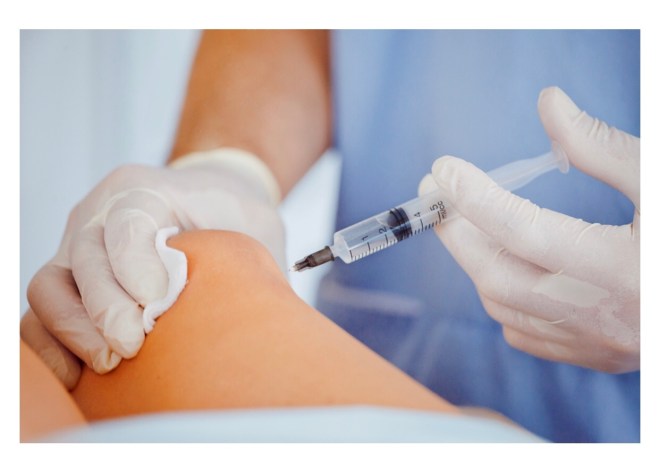
Depending on the severity of your pain, injections can be another option for easing your joint pain and help to get you moving again.

Doctors use these injections to try to reduce inflammation and pain in your joints some come with side effects and some risks.

The injections range from corticosteroids, which have been around for decades, to newer ortho-biologic injections like platelet-rich plasma (PRP) , Stem Cell and placental tissue matrix (PTM)


You and your physician will decide which one is best based on your individual needs. The issue is finding doctors qualified to do these.

Not every injection is right for every patient, in my case I hate steroid injections, not only did it make my pain worse it also comes with the risk of developing osteonecrosis. Something I already have. I have noticed that it seems like doctors are quick to prescribe and inject steroids. I stand my ground and refuse. But that’s me.


So here are some facts to help you know more about the options.

Corticosteroid injections


Use: This injection is the first line of defense against osteoarthritis symptoms and other joint pain in shoulders, knees and hips. Corticosteroids can offer relief for two to three months, and reduce inflammatory cell activity in the joint. In some people.

Side effects and Risks : As with all injections, there’s a small chance of infection about one in 1,000 as well as Joint infection.

Nerve damage.

Thinning of skin and soft tissue around the injection site.

Temporary flare of pain and inflammation in the joint.

Tendon weakening or rupture.

Thinning of nearby bone (osteoporosis)

Osteonecrosis lack of blood supply to the bone

Raised blood sugar level

Whitening or lightening of the skin around the injection site

Cost: Most insurance covers the $100 -$200 usd cost of these injections. Your insurance provider may require that you try at least one corticosteroid injection first to see whether it works. If not, you may move on to a different therapy.


Hyaluronic acid injections

Use: Hyaluronic acid (HA) injections often are used when corticosteroid injections don’t work. But they usually are approved only for use in the knee.

In some instances, doctors consider an HA injection first if you don’t have obvious signs of inflammation. HA also is a better option if you have diabetes, as corticosteroids can raise blood sugar levels.

Also known as gel injections, HA injections are chemically similar to your natural joint fluid.

When you have osteoarthritis which is different than osteonecrosis lucky me I have both, the joint fluid becomes watery.

So, this injection helps to restore the fluid’s natural properties and works as a lubricant and a shock absorber.

HA is a cushion or a buffer against inflammatory cells in the joint.  In some cases, it can stimulate the knee to start producing more natural HA.” Some physicians also believe that HA helps reduce pain by coating nerve endings within the joint.

One treatment, which may consist of between one and three injections, usually offers symptom relief for four to five months, but sometimes up to one years. However, pain and stiffness will return. Most insurance companies only approve one HA injection every six months.

In knees with osteoarthritis, the joint fluid (called synovial fluid) can break down and not provide the cushioning your knee needs

Durolane

Euflexxa

Hyalgan

Orthovisc

Monovisc

Supartz

Synvisc, Synvisc-One

Depending on which type your doctor uses, you may get a single shot. Or you’ll get three to five injections spaced a week apart.


Side effects: There’s a 1-in-100 chance of an inflammatory reaction, The most common short-term side effects are minor pain at the injection site and minor buildup of joint fluid. These get better within a few days.


Cost: HA injections cost more — about $300 to $850 per injection, but most insurance companies cover the cost for knee injections.


Platelet-rich plasma (PRP) injections

Use: Platelet-rich plasma (PRP) injections can treat osteoarthritis joint pain, and are being thoroughly researched to understand their effects.

These injections use your own blood and platelets to promote healing. Platelets contain growth factors and proteins that aid healing in soft tissues. Research shows PRP injections can alter the immune response to help reduce inflammation,

Side effects: Side effects include a very low risk of infection and pain at the injection site. You must stop oral anti-inflammatory medications for a short amount of time if you get a PRP injection.

Cost: Insurance companies don’t generally cover PRP injections and you will pay between $400 and $1,300 per injection out-of-pocket.


Stem Cell Injections

The world’s most advanced regenerative injection treatments for treating knee pain due to arthritis, meniscus tears, traumatic ligament injuries, overuse conditions and other degenerative conditions.


Side effects : mild discomfort associated with the procedure. There is a very small risk of infection whenever aspirations and injections are performed. Nerve damage, vessel damage, and injury to other important structures are exceedingly rare


Placental tissue matrix (PTM) injections


Use: Placental Tissue Matrix (PTM) injections can very profoundly decrease the pain related to osteoarthritis.


These are injections of placental tissue, which is obtained after a healthy baby is delivered from a healthy mother. Research has discovered that there is a large number of growth factors in placental tissue that promote healing, Dr. Genin says.

Side effects: Side effects include a  low risk of infection and pain at the injection site. The placental tissue is “immune privileged,” which means the body would not have an adverse reaction to it.

Cost: Insurance companies don’t generally cover PTM injections; you will pay around $1,800 -$2500 per injection out-of-pocket.


Many of these injections often are effective in reducing or stopping your joint pain, but it’s important to remember that they may not keep the pain from returning, Dr. Schaefer says. In fact, they’re most effective when used with other therapies.


As a patient who has Osteonecrosis, Osteoarthritis, and other stuff I consider surgical options as a last resort only if other treatment options have failed. Unfortunately some treatments I cannot even afford to try. I wish the FDA would get a move on and approve some things so insurance companies can have this as a form of treatment.


Stem Cells


BONE MARROW AND FAT CELLS

The stem cells used in this point of care clinic are Autologous Cells that we take from your own body.  These cells are taken from your own Bone Marrow or Fat Cells.  The cells are your own Stem Cells and will not be rejected by your body.

Taking the Bone Marrow or Fat Cells from your body is relatively painless as a mild local anesthetic is used prior to harvesting.  These cells are processed to receive the most stem cell gain and then injected into the area of your body where you need the growth factors to go to work the quickest.  Your blood is also drawn and your platelet rich plasma is added to the Stem Cells taken from your Bone Marrow or Fat Cells to increase the activity of the growth factors.

It is important that these cells are used the day they are extracted from your body in order to insure they remain alive and active.  Our clinic does not grow extra stem cells from your Bone Marrow or Fat Cells to ensure that they are alive and active.  It is an FDA requirement that you receive your cells the same day they are harvested.

You get only the stem cells we extract from your body and there is no other manipulation used except extraction and preparation of the samples taken from your own body.  The cells are taken in a procedure that creates only mild discomfort or none at all.  Ninety nine percent of our patients experience no pain obtaining bone marrow or fat cells.

CORD STEM CELLS:

Embryo and Placenta stem cells can create certain types of cancers.  The cord blood Stem Cells should only be used if they are obtained from a healthy relative and you are a good match.  Cord Stem Cells that are used outside of the country or shipped to this country are illegal.  The FDA has found diseases in these grown cells and states that most of them are dead.  Even though the physicians supplying these Cord Cells claim they are safe to use, you should use extreme caution before considering these procedures.

ARE YOU A CANDIDATE FOR THESE STEM CELL PROCEDURES

REBUILDING JOINTS & SPINE: The Stem Cells that are obtained from your body are placed into all joints and spine to rebuild and regenerate new tissue growth as determined by the clinic physician.   There has been clinical evidence that new cartilage can be grown within your joint provided you are determined a candidate by the clinical physician.  Not all patients will be a candidate and may require joint replacement.

TORN TENDONS:  If the patients tendons are not completely torn this procedure will produce new tissue growth to regenerate torn tendons. Our clinic physician can only determine this with an initial visit and evaluation.

How Does PRP Therapy Work?

To prepare PRP, a small amount of blood is taken from the patient. The blood is then placed in a centrifuge. The centrifuge spins and through a multi-functional process separates the plasma from the blood producing the PRP. This increases the concentration of platelets and growth factors up to 500% also increasing hMSC (human stem cells) proliferation as a function of 8-day exposure to platelet released concentrations 10x. (x= increase above native levels)

When PRP is injected into the damaged area it stimulates the tendon or ligament causing mild inflammation that triggers the healing cascade. As a result new collagen begins to develop. As this collagen matures it begins to shrink causing the tightening and strengthening of the tendons and ligaments of the damaged area.

What is Platelet Rich Plasma?

Platelet Rich Plasma or PRP is blood plasma with concentrated platelets. The concentrated platelets found in PRP include growth factors among the huge reservoirs of bioactive proteins that are vital to initiate and accelerate tissue repair and regeneration. These bioactive proteins increase stem cell production to initiate connective tissue healing, bone regeneration and repair, promote development of new blood vessels and stimulate the wound healing process.

PRP Regenerates Tendons & Ligaments

Tendons connect the muscle to the bone making it possible for you to do many everyday physical activities. Overuse or damage to the tendon over a long period of time causes the collagen fibers in the tendons to form small tears, a condition called tendonitis. Damage to tendons most often occurs in the knees, ankles, hips, spine, elbows, shoulders, and wrists.

Ligaments are composed of collagen fibers that hold one bone to another, stabilizing the joint and controlling the range of motion. When a ligament is damaged, it is no longer able to support the bones in the joint, which often leads to pain symptoms. The instability causing the pain in your joints does not always show up on high tech imaging equipment. Through a thorough neurological and orthopedic evaluation Dr. Baum can determine which ligaments and tendons are unstable due to injury, wear or tear.

Tendons and ligaments have a poor blood supply and they do not usually heal from damage. Combined with the stress of day-to-day activities tendons and ligaments become inefficient causing degeneration of the joint which leads to chronic pain and weakness. Patients who experience chronic pain may not even remember when the injury occurred.

How Does PRP Compare With Cortisone Shots?

Studies have shown that cortisone injections may actually weaken tissue. Cortisone shots may provide temporary relief and stop inflammation, but may not provide long term healing. PRP therapy is healing and strengthening these tendons and ligaments and in some cases thickening the tissue up to 40%.

Treatment Plan

PRP injections with guided ultrasound can be performed on tendons and ligaments all over the body. Cervical, thoracic and lumbar spine, degenerative disc disease, arthritic joints shoulder pain, hip pain, and knee pain, even the smaller joints of the body can all be treated effectively with PRP. Dr. Baum will determine whether prolo solution, Platelet Rich Plasma or a combination of both will be the most effective form of treatment for you during his initial consult and evaluation.

Frequency Of Treatments

While responses to treatment vary, most people will require 3 to 6 sets of injections of PRP. Each set of treatments is spaced 4 to 6 weeks apart.

Is PRP Right For Me?

If you have degenerative spine or joint disease, a tendon or ligament injury, laxity or tear and traditional methods have not provided relief then PRP therapy may be the solution. It will heal tissue with minimal or no scarring and alleviates further degeneration and builds new tissues. There will be an initial evaluation with Dr. Baum to see if PRP therapy is right for you.

What Can Be Treated?

Platelet Rich Plasma injections helps regenerate all areas of the body including the cervical, thoracic and lumbar spine, wrists, elbows, shoulders, hips, knees and ankles as well as tendons and ligaments all over the body.  Dr. Baum is one of the few physicians performing PRP procedures to all areas of the spine.  Our clinic treats patients with sports injuries, arthritic and degenerative joints and degenerative disc disease. More specific injuries including tennis elbow, carpal tunnel syndrome, scoliosis, ACL tears, shin splints, rotator cuff tears, plantar faciitis and iliotibial band syndrome may all be effectively treated with PRP.

What Are The Potential Benefits?

Patients can see a significant improvement in symptoms as well as a remarkable return of function. This may eliminate the need for more aggressive treatments such as long-term medication or surgery.

Special Instructions

You are restricted from the use of non-steroid anti-inflammatory medications (NSAIDs) one week prior to the procedure and throughout the course of treatments.

Initially the procedure may cause some localized soreness and discomfort. Most patients only require some extra-strength Tylenol to help with the pain. Ice and heat may be applied to the area as needed.

How Soon Can I Go Back Regular Activities?

PRP therapy helps regenerate tendons and ligaments but it is not a quick fix. This therapy is stimulating the growth of new tissue requiring time and rehabilitation. Under Dr. Baum’s supervision patients will begin an exercise program immediately following the first procedure. During the treatment program most people are able to resume normal activities and exercise.

Platelet Rich Plasma (PRP) Matrix Graft by David Crane, MD and Peter A.M. Everts PhD

PRP application techniques in musculoskeletal medicine utilize the concentrated healing components of a patient’s own blood—reintroduced into a specific site—to regenerate tissue and speed the healing process

PRP INJECTION APPLICATION SITES

Spine

Cervical/Thoracic/Lumbar/Sacral

Shoulders & Elbows

Wrist & Hand

Hip/Pelvis

Knee & Lower Leg

Ankle & Foot

Fingers & Toes

Arthritic Joints

Osteoarthritis

Some Osteonecrosis


Information

http://www.prolotherapy.com/PPM_JanFeb2008_Crane_PRP.pdf

https://drjamesbaum.com/wp-content/uploads/stemcells2002-0109.pdf


Important Videos Everyone Should watch on Biologics

https://drjamesbaum.com/2013/07/the-science-of-mesenchymal-stem-cells-and-regenerative-medicine/


Scientific Papers on Research of Stem Cells

https://drjamesbaum.com/stem-cells/scientific-papers/

knnz

I will be posting this in my other blog section also