November 29 is AVN Awareness Day. Osteonecrosis happens when blood flow to the bone is disrupted — from trauma, blood clot issues, steroids, alcohol, chemo, smoking, or sometimes no known cause. Treatments include PRP, stem cells, A2M, physical therapy, hyperbaric oxygen therapy, and in severe cases, joint replacement. Spread awareness. Save a joint. Save a life. 💙💚💜
💙💚💜
AVN Awareness Day — November 29 Too many are diagnosed late. Too many are dismissed. Too many suffer silently. Let’s change that. Share the facts. Share the hope. Raise the awareness. 💙💚💜
💙💚💜
Today, November 29, we stand with every warrior living with Osteonecrosis / AVN. Bone death is real. The pain is real. The courage is real. Let’s raise awareness for better diagnosis, better treatments, and better understanding. You are not alone. 💙💚💜
💙💚💜
November 29 is Osteonecrosis (Avascular Necrosis) Awareness Day. This disease destroys bone when blood flow is lost — but early diagnosis can save joints and change lives. 💙 Injury 💚 Blood clot issues 💜 Steroids, alcohol, chemo, radiation, smoking, high cholesterol Awareness matters. Treatment exists. Hope is real.
💙💚💜
On this AVN Awareness Day, we lift up everyone living with osteonecrosis. May God bring comfort, strength, and hope to every person fighting this painful disease. Awareness brings understanding — and understanding brings compassion. 💙💚💜
I wanted to share this here as well, because even though this isn’t a typical blog page, it is an educational page for awareness for chronic pain, osteonecrosis Arthritis, and any chronic pain of any kind but I started this to focus on bone health, but here’s a blog post from my current blogs that I wanted to share with you because I think it sometimes makes our life a little easier
In the journey of life, we are all bound to encounter trials and tribulations, whether we navigate through days filled with sunshine or weather storms of adversity. For individuals like myself, living with chronic pain has become a constant companion, although since moving to Florida it’s been less, fir 30 years it’s been a silent shadow that lingers in the background of daily existence. Yet, amidst the challenges and uncertainties that pain brings, I have learned to embrace a mindset of chronic gratitude – an attitude that transcends circumstances and illuminates even the darkest moments with rays of hope and appreciation.
I am on a personal sojourn towards discovering the profound beauty of being grateful in both the good times and the not-so-good times. This journey has taught me that gratitude is not just a fleeting emotion evoked by fleeting circumstances; it is a state of being, a conscious decision to acknowledge and appreciate the blessings that surround us, no matter how small or seemingly insignificant they may appear.
Living with chronic pain has its own set of challenges – the unrelenting ache, the limitations it imposes, the moments of despair when it seems like the pain will never end. However, through the lens of chronic gratitude, I have come to understand that even in the midst of pain, there are still reasons to be thankful. It is in those moments of discomfort and struggle that we discover our inner strength, our resilience, and our capacity to endure.
Whether we are working full-time, part-time, or currently unemployed, the trials and tribulations of life do not discriminate. They touch us all in different ways, shaping our experiences and testing our resolve. It is during these times that being grounded in faith becomes essential, serving as a beacon of light in the darkness, a source of comfort and guidance when the road ahead seems uncertain.
Being chronically grateful does not mean denying the challenges we face or pretending that everything is perfect. Instead, it is an acknowledgment of the complexities of life, a recognition that even in the midst of pain and adversity, there are still reasons to give thanks. It is an act of defiance against despair, a declaration of hope in the face of uncertainty.
So, as I navigate the highs and lows of my journey, I choose to remain chronically grateful, blessed, and thankful. I choose to see the beauty in every moment, to find joy in the midst of sorrow, and to embrace each day as a gift, no matter what it may bring. Because in the end, gratitude is not just a feeling – it is a way of life, a testament to the resilience of the human spirit and the power of faith to sustain us through the darkest of times.
Selecting between an Orthopedic Surgeon and a Rheumatologist for Your Musculoskeletal Pain: A Comprehensive Guide
Choosing between an orthopedic surgeon and a rheumatologist can be a pivotal decision when seeking treatment for musculoskeletal pain. Usually we also may need a referral from our PCP.
Understanding the differences between these specialists and the conditions they treat is essential for effective pain management and recovery. In todays blog post we’ll delve into the nuances of orthopedic surgery and rheumatology, helping you make an informed choice regarding your healthcare needs.
Orthopedic Surgeon vs. Rheumatologist: Which Specialist to Choose? When deciding between an orthopedic surgeon and a rheumatologist, several factors come into play. Let’s explore the distinctions between these medical professionals and the conditions they specialize in treating:
Orthopedic Surgeon: Orthopedic surgeons focus on diagnosing and treating physical ailments related to the musculoskeletal system. Consider consulting an orthopedic surgeon if you experience:
Pain resulting from a physical injury or trauma
Weight-bearing discomfort (e.g., knee pain, foot pain, during certain movements)
Osteoarthritis or joint degeneration
Persistent joint pain unresponsive to conservative treatment
Need for joint replacement surgeries, particularly in hips and knees
Rheumatologist: On the other hand, rheumatologists specialize in systemic inflammatory disorders affecting the musculoskeletal system. It’s advisable to seek a rheumatologist’s expertise if you exhibit symptoms such as:
Joint or muscle pain accompanied by systemic manifestations like fatigue, fever, or rashes
Non-traumatic joint pain or stiffness
Pain affecting multiple joints simultaneously
Diving Deeper: Orthopedics and Rheumatology Explained Understanding the scope of orthopedics and rheumatology provides insights into their respective areas of expertise:
Orthopedics: Orthopedics encompasses the diagnosis and treatment of musculoskeletal conditions, including bones, muscles, ligaments, and tendons. Orthopedic surgeons specialize in:
Identifying structural abnormalities and injuries within the musculoskeletal system
Performing surgical interventions to address fractures, ligament tears, and cartilage damage
Providing non-surgical therapies like physical therapy, injections like cortisone, prp, stem cell, prolotherapy and medications for pain management and rehabilitation
Rheumatology: Rheumatology focuses on diagnosing and managing rheumatic diseases, which involve systemic inflammation and immune dysfunction affecting the musculoskeletal system. Rheumatologists are adept at:
Conducting comprehensive evaluations and diagnostic tests to identify underlying inflammatory conditions
Prescribing disease-modifying medications and biologics to alleviate symptoms and prevent disease progression
Collaborating with other specialists, including orthopedic surgeons, for integrated care in complex cases requiring surgical intervention
Orthopedic Treatment vs. Rheumatological Management: A Comparative Analysis The treatment modalities offered by orthopedic surgeons and rheumatologists differ based on the underlying causes of musculoskeletal pain:
Orthopedic Treatment: Orthopedic interventions primarily target structural abnormalities and injuries within the musculoskeletal system. These may include:
Surgical procedures such as ACL reconstruction, joint replacement surgeries (e.g., hips, knees), and arthroscopic interventions
Non-surgical therapies like physical therapy, corticosteroid injections, and orthotic devices for functional support
Rheumatological Management: Rheumatologists focus on managing systemic inflammatory conditions through targeted medical interventions. These may involve:
Pharmacological treatments such as disease-modifying anti-rheumatic drugs (DMARDs), biologic agents, and corticosteroids to suppress inflammation and modify disease progression
Multidisciplinary approaches integrating medication management, lifestyle modifications, and supportive therapies for holistic care
Making an Informed Decision: Factors to Consider When determining whether to consult an orthopedic surgeon or a rheumatologist, consider the following factors:
Identify the Root Cause: Evaluate whether your pain stems from a traumatic injury, structural abnormality, or underlying inflammatory condition.
Assess Additional Symptoms: Take note of accompanying systemic symptoms such as fever, fatigue, or skin changes, which may indicate an underlying rheumatic disease.
Seek Specialized Expertise: Choose a specialist whose skills and experience align with your specific condition and treatment needs.
Emphasize Early Intervention: Prioritize timely evaluation and intervention to prevent disease progression and optimize treatment outcomes.
Remember choosing between an orthopedic surgeon and a rheumatologist depends on the nature of your musculoskeletal pain, underlying conditions, and treatment goals.
By understanding the roles and expertise of these specialists, you can make an informed decision to address your healthcare needs effectively. Remember, early intervention and personalized care are key to achieving optimal recovery and enhancing your quality of life.
Since late stage Osteonecrosis leads to severe osteoarthritis I feel they are under the same umbrella although different in some ways and the same in other ways.
If you have Osteonecrosis of the knee like me exercise should and can still be a part of your lifestyle. But we must must must use caution and we just can’t go all willie nillie and do this or that on our own. We need to always first consult our ortho and then see a trained physical therapist one who understands osteonecrosis. The key is to know the right exercises and the right way to do them.
Generally, long-term exercise is safe for adults with knee pain from Osteonecrosis but as we know we can go from stage one to stage 3 in as less as weeks and as long as months even years, that’s why it’s imperative we keep in contact with our pcp and orthopedic.
Exercise when performed correctly, the right exercises can even help decrease our pain of osteonecrosis and osteoarthritis and other bone and joint conditions
It can improve our ability to carry out ordinary physical activities. We have to to keep our muscles strong as they support the joints and keeps them stabilized.
It may seem counterintuitive for exercise to decrease knee pain, because when our knees hurt we don’t really feel like exercising, but for me that’s when I have to push through because it will help my pain
But it’s helpful to understand how it works.
Exercise improves:
hormonal balance
lowers blood sugar
improves articular cartilage tolerance
strengthens muscles and muscles are what supports our bones.
Exercise also improves your muscle strength. Stronger muscles are able to carry your body weight more efficiently, relieving some of the burden put on the joints.
However, performing the “wrong” exercise or using poor form may increase pain or inflict irritation to the joint.
“Pain with exercise isn’t normal,”
That said, it’s important to note that when starting a new exercise program, you may experience “muscular soreness,” which is different from joint pain.
It’s normal to experience muscle soreness fir a day or even two after exercises, when I first started a simple walking program I walked every other day. I gave my muscles a chance to rest.
I liked my PT sessions and afterwards I got the Electrical Muscle Stimulation (EMS) device which helped my muscles relax and recover.
I highly suggest a physical therapist, they will be guiding you through the process. An expert will analyze your form and make suggestions. They show you how to properly do the exercises.
You don’t want to injure something else in the process of trying to stay active.
Biking , swimming water aerobics are much easier on the joints.
Several states have officially proclaimed today as Osteonecrosis awareness day this past year a few more states came on the awareness train. And by next year God willing all 50 state’s as well as the US Virgin Islands and Puerto Rico will as well.
Finally Avascular Necrosis-Osteonecrosis has an official awareness date.
The date is November 29
I have been working on proclamations for several months and I am in the process of getting the awareness day Nationally recognized as well.
I’m so grateful that our elected officials took the time to talk to me.
And set a date for AVN-ON awareness
I have heard back from several officials that will also be adopting November 29 .
I have been advocating for over 5 years on Avascular Necrosis -Osteonecrosis and I am proud and grateful that our elected officials are also recognizing this awareness day.
What is a proclamation?
A proclamation is a formal way to make a public announcement or declaration. Government officials, such as mayors and state legislators, often issue proclamations to announce upcoming events or celebrations or to increase public awareness of particular issues.
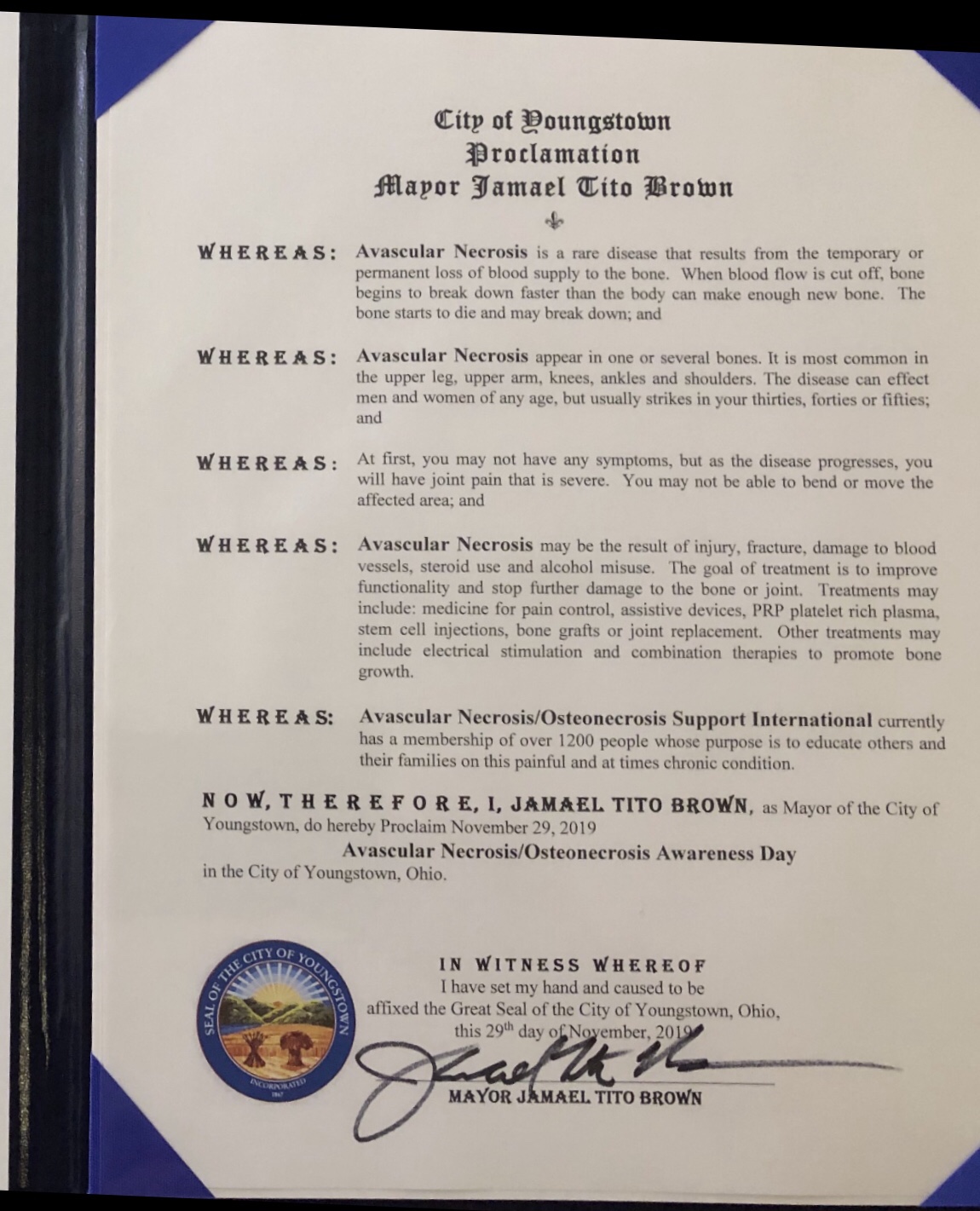
I am proud to say I was issued a proclamation by my local Mayor of Youngstown Ohio
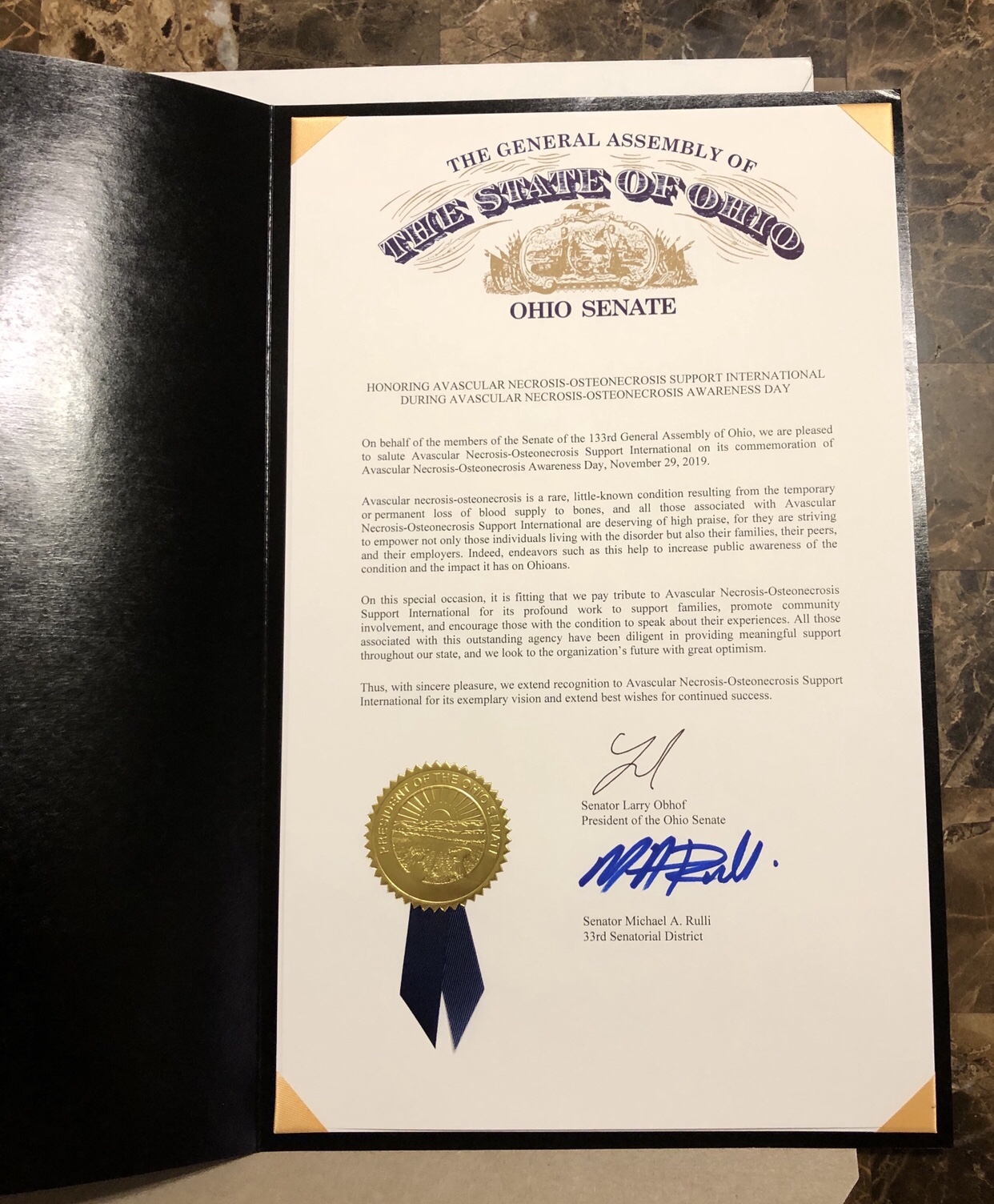
And also by Senator Michael Rulli of Ohio.
I have heard from Washington DC and it’s a longer procedure but it’s being looked at.
Right Now AVN-ON falls under the rare disease / disorder category.
In the United States, a rare disease is defined as a condition that affects fewer than 200,000 people. This definition was created by Congress in the Orphan Drug Act of 1983. Rare diseases became known as orphan diseases because drug companies were not interested in adopting them to develop treatment
Well I am hoping that now that AVN is getting recognition we can get more research to help all of us that are dealing with this painful condition.
Thank you to
Senator Michael Rulli -Ohio
and
Mayor Jamael Tito Brown – Youngstown Ohio
For helping us who suffer finally get the awareness day we deserve





 Avascular Necrosis-Osteonecrosis Education and Resources